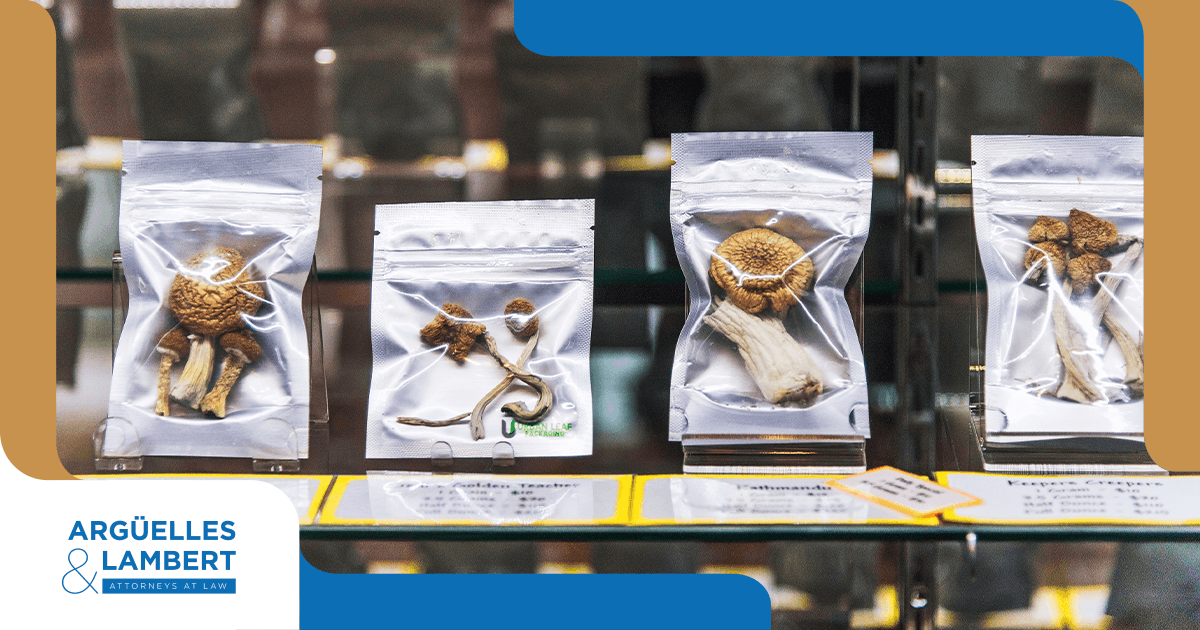
Psilocybin mushrooms, commonly known as magic mushrooms, have received increasing attention across the United States as laws and attitudes surrounding psychedelic substances continue to evolve.
However, that does not mean they are legal in Texas.
Texas law classifies psilocybin and psilocin, the psychoactive substances associated with magic mushrooms, as controlled substances. Possessing them can result in serious criminal charges, including felony charges even when relatively small amounts are involved.
Understanding how Texas classifies these substances and the potential penalties is important for anyone facing a psilocybin-related criminal charge.
Are Psilocybin Mushrooms Illegal in Texas?
Yes. Psilocybin and psilocin remain as a controlled substances under Texas law.
The Texas Controlled Substances Act places these substances in Penalty Group 2, along with several other hallucinogenic substances.
As a result, knowingly or intentionally possessing a controlled substance classified within Penalty Group 2 without legal authorization can result in prosecution under Texas Health and Safety Code §481.116.
The fact that psychedelic substances may have been decriminalized or treated differently in other jurisdictions does not change their status under Texas law.
Is Possession of Magic Mushrooms a Felony in Texas?
Possession of a Penalty Group 2 controlled substance can be charged as a felony in Texas, including when the amount involved is less than one gram.
Under Texas Health and Safety Code §481.116, the level of the offense increases according to the aggregate weight of the controlled substance, including adulterants or dilutants.
This makes mushroom possession potentially much more serious than someone unfamiliar with Texas drug laws might expect.
What Are the Penalties for Psilocybin Possession in Texas?
The potential charge depends largely on the amount involved.
Under §481.116, possession of less than one gram of a Penalty Group 2 substance is generally a state jail felony. Possession of one gram or more but less than four grams is generally a third-degree felony, with offense levels continuing to increase as the amount increases.
A drug possession case can therefore carry significant consequences even when the allegation involves a relatively small quantity.
The exact charge and potential punishment will depend on the circumstances of the case and the amount the State alleges was possessed.
How Is the Amount of Psilocybin Determined?
Weight can become an important issue in a Texas controlled-substance prosecution.
Section 481.116 measures Penalty Group 2 possession using the aggregate weight of the controlled substance, including adulterants or dilutants.
In a case involving mushrooms or another substance containing psilocybin or psilocin, how the substance was identified, tested, and weighed can therefore become important to the criminal charge.
The specific evidence and laboratory analysis should be evaluated in each case rather than assuming that every psilocybin case will be treated identically.
What About Manufacturing or Delivering Psilocybin?
Possession is not the only potential criminal allegation involving psilocybin.
Texas law separately addresses the manufacture, delivery, and possession with intent to deliver controlled substances in Penalty Group 2.
These allegations can expose a defendant to different and potentially more serious consequences than simple possession.
Whether prosecutors pursue a possession or delivery-related offense can depend on the evidence involved in the case, including the amount and circumstances surrounding the alleged possession.
Can a Psilocybin Charge Have Consequences Beyond Jail or Fines?
Potential consequences of a controlled-substance case are not always limited to the immediate criminal penalties.
A felony record can affect employment, professional opportunities, firearm rights, and other areas of a person’s life.
For individuals who are not U.S. citizens, a drug-related criminal case can create an additional concern: immigration consequences.
Federal immigration law contains specific provisions involving controlled-substance offenses. Depending on a person’s immigration status and the disposition of the criminal case, a drug offense may affect admissibility, immigration benefits, or expose a person to removal proceedings. Federal law, for example, lists certain controlled-substance convictions as grounds of deportability.
This is one reason criminal cases involving non-U.S. citizens may require consideration of both criminal and immigration law before the case is resolved.
What Should You Do If You Are Charged With Mushroom Possession in Texas?
A psilocybin possession charge should be evaluated based on the specific facts and evidence involved.
Important questions may include:
- Whether the search or seizure was lawful
- Whether the substance was properly identified and tested
- The amount attributed to the defendant
- Whether the State can prove knowing or intentional possession
- Whether the evidence supports possession, delivery, or another alleged offense.
For non-U.S. citizens, potential immigration consequences should also be considered before making decisions about a plea or other resolution.
Charged With Psilocybin or Mushroom Possession in Texas?
Texas continues to treat psilocybin and psilocin as controlled substances, and a mushroom possession allegation can result in serious felony charges.
At Arguelles & Lambert, our criminal defense attorneys evaluate the evidence, circumstances, and legal issues involved in controlled-substance cases.
If you have been charged with possession of psilocybin, mushrooms, or another controlled substance in San Antonio or the surrounding areas, contact our office to discuss your case.
Disclaimer: This article is for informational purposes only and does not constitute legal advice. Reading this content does not create an attorney-client relationship.